Winning Ways | July 2020
We are super excited to see that we are all gradually able to get back to showing again as we navigate this new environment! Read on for exciting updates we would like to share with the SynNutra family…



We are super excited to see that we are all gradually able to get back to showing again as we navigate this new environment! Read on for exciting updates we would like to share with the SynNutra family…
Nutraceutical is a relatively new word. So new, in fact, that my spellcheck doesn’t recognize it. Nutraceutical is the product of smashing “nutrition” and “pharmaceutical” together, becoming representative of finding a natural pathway to better health, performance and treatment of disease.
According to the National Nutraceutical Center, Nutraceuticals are made from herbal or botanical raw materials. More than 40 percent of Americans use alternative medical therapies in the form of Nutraceuticals to treat and cure ailments and disease, without the negative side effects of prescription drugs.
Humans are not the only species being treated with Nutraceuticals. Recently the equestrian world has been hit harder than ever with criticisms and accusations of over-medicating, and the use of performance enhancing drugs (PEDs). In racing this includes the controversial use of Lasix (a diuretic used to prevent pulmonary hemorrhage) and other PEDs like adrenocorticotropic hormone (ACTH), Clenbuterol and now banned anabolic steroids. For many years trainers have used these controversial drugs in an attempt to create a faster, stronger animal with rapid recovery time.
A variety of performance enhancing pharmaceuticals are also used in sport or show horses to improve performance in a given endeavor. This can be easily deduced based on the 29-page list of Prohibited Substances released by the Federation Equestrian International. In recent years, equestrians have received a positive test for medications ranging from the sedative Reserpine to the ulcer treatment Cimetidine. For each of the last three years, at least four new substances have joined the prohibited or controlled list. Examples of controlled substances that can still be used with veterinary permission are Non-Steroidal Anti-inflammatory medications (NSAID) such as Phenylbutazone and Flunixin, both low-level painkillers.
Is the use of pharmaceuticals for performance enhancement bad horsemanship? The answer lies in personal preference based on catering to the horse’s overall purpose, the medication’s effect on the horse and what the trainer is trying to achieve.
The products we develop have been formulated by taking a unique problem solving approach to individual health issues. “Synergistic” means various parts are working together to produce an enhanced result, a product greater than the sum of its parts (vocabulary.com). Synergistic and nutraceutical are the sire and dam of SynNutra. After spending more than a quarter century treating performance horse health issues, the professionals here at SynNutra have found a synergistic way to help horses become the best they can be, using multiple herbs and endogenous nutrients. SynNutra is able to provide clients with natural, healthy horsepower formulated to help your horse become all he or she can be, without the risks and side effects of prescription drugs.
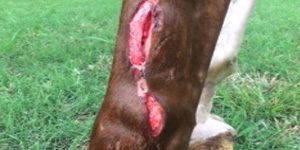
“I think we need stitches,” was the text I received last Sunday at 8:30 p.m. My friend Jessie’s three-year-old Quarter Horse Ghost had a major cut on his hind leg. Talk about bad timing, our attempts to get ahold of a vet were futile and with the truck in the shop, an expensive trip to the equine ER out of the question.

Upon closer inspection Ghost had exposed the bone in a clean and ugly slice on the outside of his lower left hind and also had a deep cut on the outside of his ankle. Luckily Jessie had put together a fabulous equine first aid kit containing everything we needed and more. We pulled out several must haves; a bottle of Betadine scrub, a Telfa pad, rolled cotton, Vetwrap, Elastikon, and Chlorhexidine ointment.
Ghost was in pain, he was sweating, agitated, stopping his feet and swishing his tail. In the dim light we ran cool water from the hose over the cuts and used the Betadine surgical scrub to clean the areas around and in the two wounds. The flow of blood had begun to slow down so we slapped a glob of Chorlorahexidine with the sterile Telfa pads over the two wounds. Wrapping the leg in clean cotton we made a compression bandage applying the Vetwrap tightly around the leg and using the Elastikon to adhere and seal the wrap at the top and bottom, keeping dirt and debris out and helping to secure the bandage.
Early the next morning we took Ghost to the vet and swelled with pride as he told us that we had done a “textbook” job caring for the injury!

With recent events in mind here is a list of items to keep in a first aid kit, you never know when you might come home to an equine accident.
Include a basic first aid book and ask your vet if he or she has any additions or suggestions for your kit. Always attempt to contact a vet in the case of an emergency or as soon as possible afterwards.
Aside from standing in the winners’ circle, naming a racehorse is arguably one of the most fun parts of ownership. Over the years we have seen beautiful, witty, stoic, and even downright perverse names, each with a story behind it. Obtaining the perfect name can be more of a process than you think.
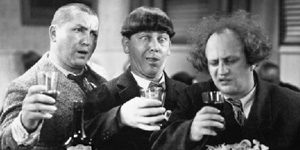
The Jockey Club has quite a few rules to keep in mind when registering your foal’s name. If a foreign language is used there must be an accompanying translation to English. Graded Stakes winner and Spanish named Tres Borrachos translates to “Three Drunks” in English. I wonder who he was named after?
Horses registered in the same country cannot have the same name at the same time, so put on your creative thinking cap! A name becomes fair game after five or 10 years if the horse has not had a significant racing or breeding career. In the case of an iconic runner their name will be marked with a P for Permanent in the Online Names Book and will never again be available; for example: Secretariat (P).
Just like a tweet or a vanity plate for your car, the name can only include a certain number of characters. The maximum is 18 characters, which can result in the challenging to read “all one word” named horses like Allabouttheladies and Howaboutthemheels.
Names ending with “filly, colt, stud, mare, stallion” or other horse references can’t be used. However, names beginning with those references are allowed such as Filly Cheesecake, Fillyfillybangbang, Coltergeist, Coltimus Prime, and Horse B With You.
A living person’s name cannot be used unless written consent has been presented to The Jockey Club. California trainer Vladimir Cerin named the horse “Blake” after his middle son but according to the rule above, his youngest son “Colt” will not have a horse with his namesake. A horse named Melanyhasthepapers honored a Santa Anita racing office employee who controls the registration papers.
Names of the no longer living can only be used with a satisfactory explanation sent to The Jockey Club. If you name a horse after a deceased relative you better hope it wins a few races so your honoree is not rolling in their grave! Fan favorite Paynter was originally named MC’s Dream after late jockey Michael Baze and his name was changed when he changed ownership.

Names with artistic or creative reference are off the table. I galloped a horse initially called The Wall, in reference to the timeless Pink Floyd album. That name did not pass inspection with The Jockey Club but he was successfully renamed Doubledeesonthetee in reference to the owners’ sisters, both with names beginning with D, golfing together.
A name will not pass the Registrar’s scrutiny if it has an obscene meaning, or is in poor taste. Owner Mike Pegram seems to find joy in skirting the Jockey Club name laws with his fun and risqué appellations. Some of the most memorable are Letthebiggatorout, Isitingood, and Myfavoritehigh. Breeder and trainer Barry Abrams attempted the questionable name Nutzapper. The Jockey Club rejected that so he renamed the gelding Guts after a horse he had conditioned back in his harness training days.
Despite all the rules it’s still possible to come up with a crowd pleasing name. My Wife Knows Everything and My Wife Doesn’t Know duke it out in the stretch in this now-famous race call from Monmouth Park!
On the heels of the Kentucky Derby many people wonder how winner California Chrome travelled to and from his home racetrack of Los Alamitos in Cypress, California, to Churchill Downs in Louisville, Kentucky.

California Chrome wasn’t shipped by train and he wasn’t driven in a trailer. He was flown by air in a Boeing 727 Cargo plane. It sounds unbelievable but there are numerous reasons why the best horses in the world are flown from race-to-race instead carried in a horse van.
Horses are foragers and their bodies function best when they have freedom to move around. A trip from Southern California to Churchill Downs, takes about 35 hours for a direct drive, and with layovers it could take up to three days! Your Derby winner would have arrived exhausted, stressed, underweight and possibly ill.
Reducing travel time reduces stress so a horse can stay at the peak of his performance ability and even train the next morning. From stall-to-stall, California Chrome was on the road for about six hours before arriving in Kentucky.

The best show horses and racehorses in the world can accumulate more frequent flier miles than George Clooney in Up In The Air! No security lines, free access to hay, and experienced handlers delivering first-class care make air travel a tempting transportation method. The only part that is unappealing is the price tag. Most flights cost from $3,500 – $10,000 per horse. This explains why only the upper class equines are making trips through the sky, while the bourgeoisie are still riding in a traditional horse van.
When California Chrome arrived at the airport, he was lead off of a large, semi-sized horse van, and up a gangplank walkway (with secure siding), and into the plane. His hooves never touched the runway. He and his equine travel mates were contained in slots lined up and facing the front of the plane. Racehorses usually ship calmly because each slot is similar to another small space they are accustomed to, the starting gate. In case of a rare emergency, the knowledgeable employees of the equine airline are qualified to administer tranquilizer.

No pilot announcements and no windows make the landing a surprise for human companions. No temperature regulation can result in what I have heard people call “the flying icebox”. There are several rows of seats located in the back of the plane behind the horses for the grooms, riders and trainers.
California Chrome had an even shorter flight when he shipped to Maryland for the Preakness and his shot at the Triple Crown. Best of luck as you fly to the wire California Chrome!
Every year there is full-blown battle to obtain one of the 20 available spots in the Kentucky Derby’s starting gate. Only the absolute best three-year-old Thoroughbreds gain entry and a chance to win their place in the history books.

For 27 years Graded Stake earnings controlled admission to the Derby, win the most money, secure your spot. As with many things in life, and horseracing, this just wasn’t fair. Two-year-olds that won the rich Breeders’ Cup Juvenile or million dollar Delta Jackpot were getting in without a promising start in the months leading up to the big day and horses who were just beginning to blossom were not granted entry but merely playing catch-up as Derby Day approached.
The point system was introduced for the crop of horses to be entered in the 2013 Kentucky Derby. Points were distributed to the top finishers of appointed prep races based on a sliding scale designed to fill the starting gate with the best three-year-olds, best equipped to run one mile and one quarter on the first Saturday in May (Rogers, 2013).

Street Sense (2004) is the only horse in history to have won the Breeders’ Cup Juvenile and the Kentucky Derby. A lot can happen to a horse’s ability during the six months pre-Derby while it has to maintain its young form and get the longer distance. Although the BC Juvenile remains high in dollars, nowadays the first place finisher earns a meager 10 points.Often a horse is entered in the Kentucky Derby with hopes that the horse will sweep the entire Triple Crown Series, not just win the Derby. Ideally, horses earning their way into the Derby show potential to compete in the Preakness and Belmont and the point system puts the most emphasis on preps occurring closest to the main event.
The most important preps are the final “big seven” like the Florida Derby, Santa Anita Derby, and Arkansas Derby, with 100 points awarded to the winner. Interestingly the “Hail Mary” of Derby preps, The Derby Trial, runs one week before the main event and is not offered as a Derby prep point race.

It’s notable that the D. Wayne Lukas trainee Strong Mandate has 11 points, placing him 29th on the list with no hope of being in the body of the race. His earnings however are over $479K; in previous years he would have held the 13th spot.
In the case of a tie for the coveted 20th spot, non-restricted Stake earnings will be applied.
Good luck to all in the 140th running of the historical and beautiful Kentucky Derby on May 3, 2014 and may the best horse win!