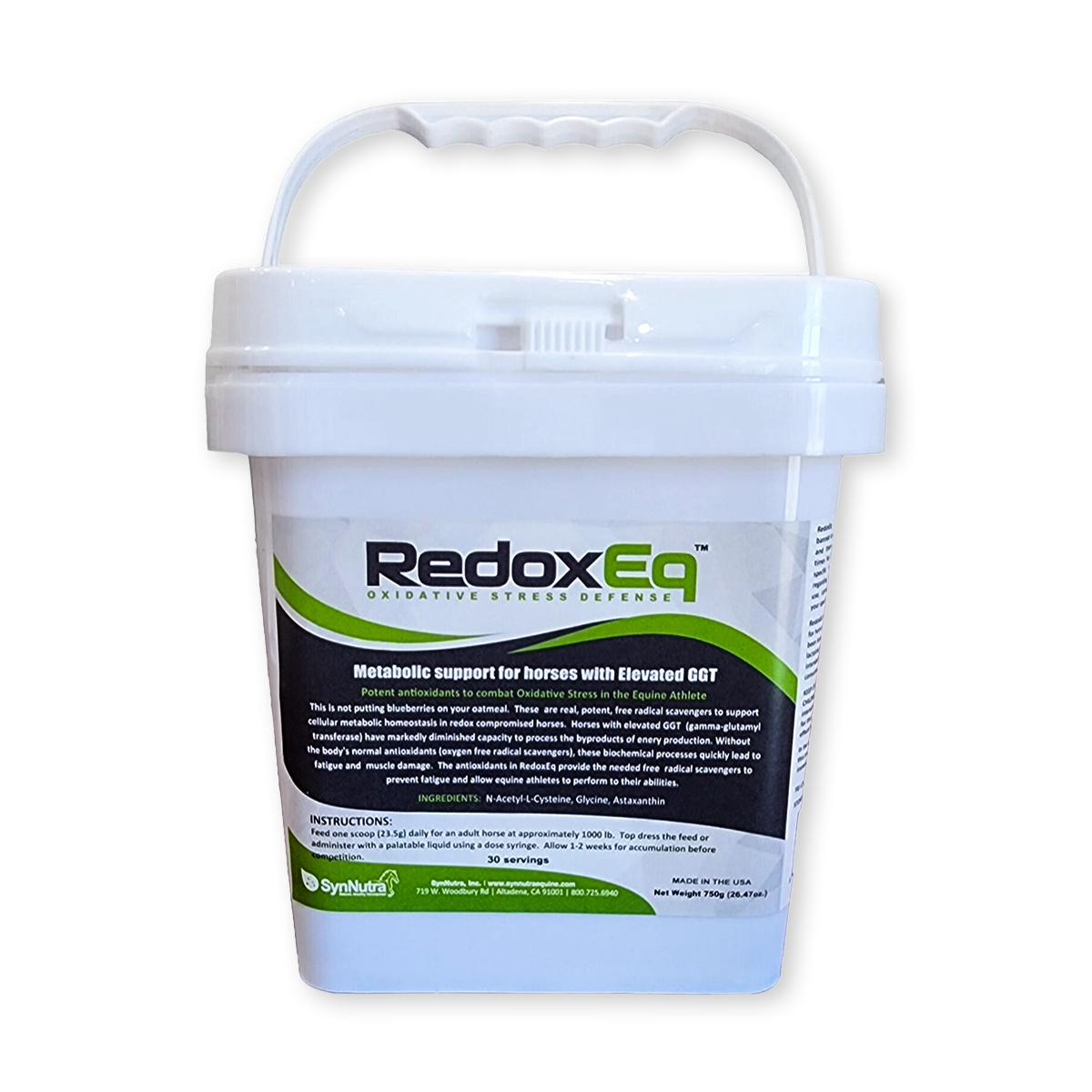
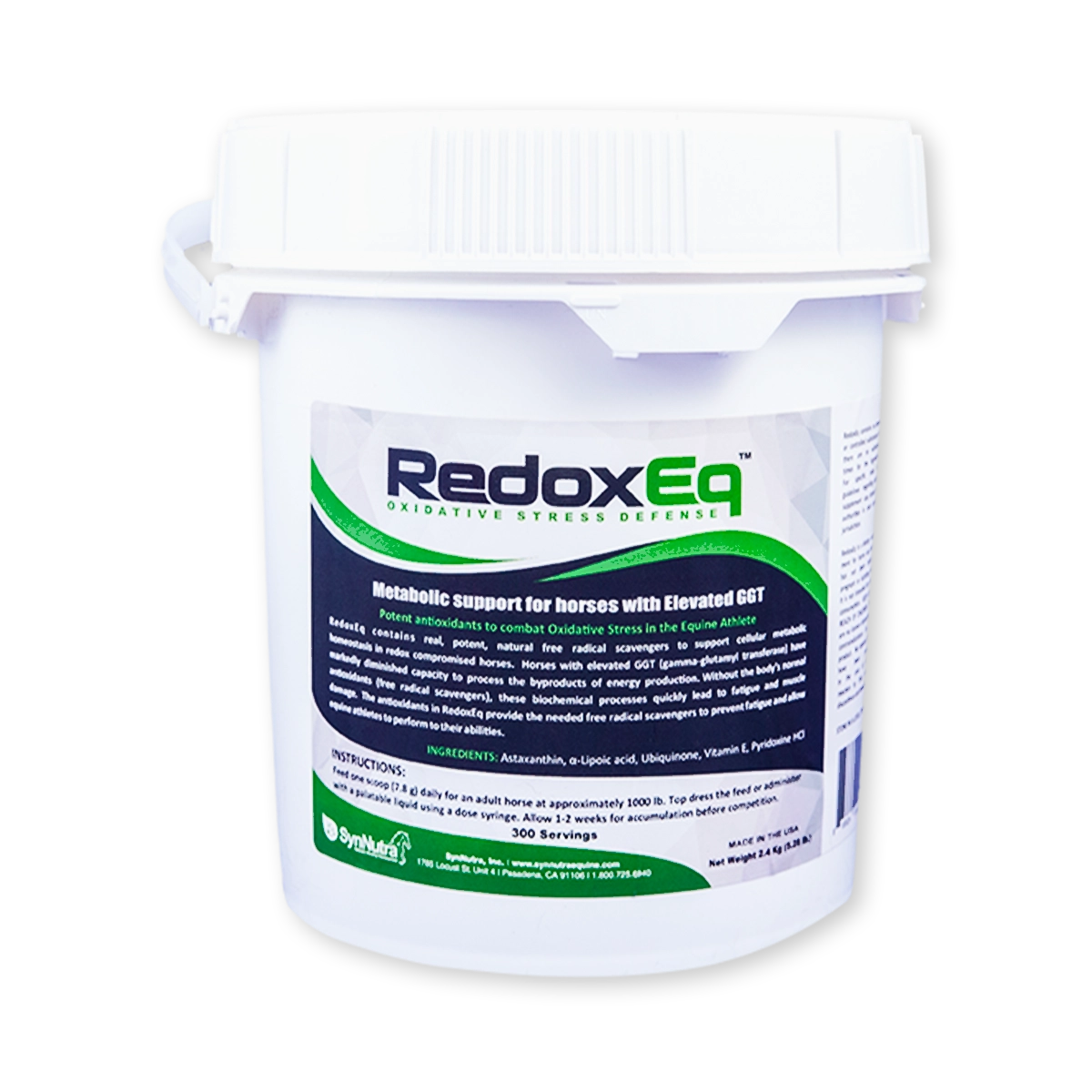
RedoxEq – Horse metabolic support supplement
Price range: $180.00 through $1,800.00 — or from Price range: $171.00 through $1,710.00 / month
Metabolic Support For Horses With Elevated GGT
Super concentrated antioxidant for equine athletes
● Supports Metabolic Balance in Active Horses – Formulated to promote the body’s natural defenses against oxidative stress associated with training, competition, transport, and increased metabolic demand.
● 100% Natural Equine Supplement – RedoxEq® features a unique, unrivaled blend of high-quality, naturally derived antioxidant compounds selected for consistency, purity, and bioavailability.
● Nutritional Support for Optimal Metabolic Function – Provides targeted antioxidant nutrients that support healthy cellular processes involved in energy metabolism and overall physiological balance.
● Contains real, concentrated, natural free radical scavengers
● Drug-Free, Show-Safe & Compliant – Contains no drugs and no banned or controlled substances.
● Contains no banned or controlled substances
● Made in the USA & Satisfaction Guaranteed – Manufactured in the United States using carefully sourced ingredients. Backed by an unconditional money-back guarantee.
● No withdrawal times
● If your horse has elevated GGT, consider supplementation with RedoxEq®
Available in two sizes.
Every SynNutra Equine® product is Veterinarian-formulated and tested.
RedoxEq® is a natural animal health supplement formulated to support normal cellular balance and antioxidant status in active horses. Horses engaged in intense training, competition, and other physically demanding activities experience increased metabolic activity, which can lead to the production of oxidative byproducts.
Oxidative stress occurs when normal metabolic processes generate reactive compounds at a rate that challenges the body's inherent antioxidant systems. While common in active horses, supporting antioxidant status is an important part of maintaining normal cellular function and overall physiological balance during periods of increased exertion.
RedoxEq® provides an unrivaled blend of naturally derived antioxidant compounds intended to support the body's normal defense mechanisms against oxidative stress. The formulation is designed to complement the horse's natural antioxidant systems and support healthy cellular function during times of elevated metabolic demand.
RedoxEq® is formulated without substances prohibited or controlled by major equestrian competition organizations, making it perfect for horses in regular training and competition.
Let's start with the bottom line. If your horse has elevated GGT, you want to give your horse RedoxEq®. Keep reading to learn why.
RedoxEq® contains real, concentrated, natural free radical scavengers to support cellular metabolic homeostasis in horses with elevated antioxidant demand. Horses with elevated GGT (gamma-glutamyl transferase) have markedly diminished capacity to process the byproducts of energy production. Without the body's normal antioxidants (free radical scavengers), these biochemical processes can challenge the body's normal cellular function. The antioxidants in RedoxEq® support oxidative stress defense so equine athletes can perform to the best of their abilities.
RedoxEq® contains no banned or controlled substances, and there are no withdrawal times for the ingredients. For specific rules and guidelines regarding dietary supplement use, contact the authorities in your specific jurisdiction.
Ingredients: Astaxanthin, N-Acetylcysteine, Glycine
Elevated GGT And Oxidative Stress In Thoroughbred Racehorses — Equine Oxidative Stress Syndrome
Sep 23, 2019 | Oxidative Stress
GGT (gamma glutamyl transferase) elevation in racehorses is associated with a sudden onset of exaggerated poor performance. Since affected horses outwardly appear healthy and normal, other than their inability to work more than ½ or ⅝ of a mile, GGT-associated equine oxidative stress syndrome often goes unrecognized and unsupported.
The correlation of poor performance to elevated GGT levels is beginning to be recognized by the Thoroughbred racing industry. Traditionally, GGT has been used as an indicator of liver disease (biliary stasis, cancer). If an abnormal level of the enzyme were found in a horse's blood work, it was dismissed as insignificant by diagnosticians. In recent years, however, several high-profile racehorses have been plagued by inexplicable bouts of poor performance, and were found to have elevated GGT. Given the mounting evidence, the veterinary community has begun to investigate and conduct research studies on this formerly dismissed enzyme elevation.
It is now clear that GGT is an indicator and participant in equine oxidative stress syndrome.
Relevant Questions
What is GGT?
GGT (gamma glutamyl transferase) is a cell surface enzyme distributed throughout the body. It has historically been measured as an indicator of liver disease (bile stasis in particular) but it is found in all somatic cells. GGT transfers amino acids across the cell membrane and plays a major role in maintaining glutathione, the body's master antioxidant.
When GGT levels are abnormally high, the enzyme degrades glutathione, the body's primary antioxidant, causing a depletion of this critical peptide. Without its key antioxidant to protect it, the body undergoes oxidative stress.
What is oxidative stress and why does it affect performance?
Oxidation is a necessary biochemical process that provides energy for cellular function, but it also forms a small amount of destructive reactive species as byproducts. Reactive oxygen and nitrogen species, or "free radicals" as they are commonly known, are unstable and cause cell damage. Once formed, they need to be transformed as quickly as possible to prevent degenerative changes.
Antioxidants, or "free radical scavengers," are the primary defenders which curb free radicals, neutralizing the threat they pose to cells and tissues. When the body has enough antioxidants to stabilize the free radicals produced by oxidation, it is balanced. When the body is lacking in antioxidant levels, it suffers from oxidative stress.
When a horse endures oxidative stress, it is experiencing a biochemical challenge to its cells, lipids, proteins, and DNA. Chronic oxidative stress has been associated with a range of long-term physiological challenges in horses. Even in its early stages, when only fatigue is present, it is an imbalance that benefits from prompt nutritional support for the overall health and longevity of the horse.
How do horses get elevated GGT?
The exact cause of equine oxidative stress syndrome is still unclear. A group of talented veterinarians and scientists are currently working on some fascinating research regarding GGT. Hopefully in the coming few years, these studies should provide veterinarians and horse owners with new insights. Just remember that with any new area of exploration we will likely get a lot more questions before we get all the answers.
Some current theories as to why horses develop high levels of GGT include:
Viruses: There are a few newly discovered viruses associated with the elevation of GGT. From an epidemiological perspective, the viral theory fits the occurrence patterns of new cases. However, it doesn't necessarily explain all of the metabolic disturbances associated with the syndrome.
Over training: Conceptually, over training could possibly explain the metabolic abnormalities associated with elevated GGT. However, most of the diagnosed horses are not trained any differently than horses that have normal GGT levels. Moreover, some of the newly diagnosed cases of elevated GGT have been racing and intensely training for years with no previous elevation in their medical histories.
Environmental factors: GGT is an inducible enzyme, meaning that increases in GGT production can be stimulated by other biological factors. In people, GGT elevation is associated with various diseases such as diabetes, liver cancer, kidney disease and obesity. It is also thought that certain nutritional ingredients can stimulate overproduction of the enzyme.
How can it be prevented?
Determining the exact cause(s) of elevated GGT in the racehorse will go a long way toward helping veterinarians and researchers better understand the condition. Practicing good hygiene and sanitation and preventing cross-contamination between horses is important to support the overall health of the herd. In the case of viral infections, dipping bits and lead chains, individual water buckets, and personnel hygiene will help prevent spread.
Keeping good, detailed records of horses' management practices and noting all inexplicable changes in performance may provide good information to researchers when new cases are discovered. Any association with changes in feed, bedding, weather, training, and so on should be noted.
How is it supported?
Horses with elevated GGT benefit from targeted nutritional support as part of an overall management program. Over the past several years, horses supplemented with a blend of antioxidant nutrients have been able to maintain normal performance levels as part of a management program. Nutritional antioxidant support has become a recognized component of management programs for horses with elevated GGT.
Nutritional support for this condition is geared toward finding and addressing the underlying factors contributing to GGT elevation. While antioxidant supplementation is not a specific treatment, supporting the body's normal antioxidant systems is recognized as a beneficial component of overall nutritional management.
Additional information
| Weight | N/A |
|---|---|
| Dimensions | 6.5 × 5 × 4 in |
| SERVINGS |
Frequently Asked Questions For RedoxEq
How does RedoxEq work?
RedoxEq works by supplying a concentrated blend of naturally derived antioxidant compounds, Astaxanthin, N-Acetylcysteine, and Glycine, that support the body’s normal defense mechanisms against oxidative stress. Horses with elevated GGT may have a reduced ability to maintain glutathione, the body’s primary antioxidant.
RedoxEq’s ingredients support antioxidant status and help neutralize the reactive byproducts of energy metabolism, promoting cellular balance during periods of elevated metabolic demand. This product is not intended to diagnose, treat, cure, or prevent any disease.
What are the benefits of using RedoxEq?
- Antioxidant support: Astaxanthin is a potent, naturally derived free radical scavenger that helps protect cells, lipids, and proteins from oxidative damage.
- Glutathione precursor support: N-Acetylcysteine provides cysteine, a key building block for glutathione synthesis, helping replenish the body’s primary antioxidant system.
- Cellular metabolic balance: Glycine plays a role in glutathione production and supports normal cellular metabolic processes, particularly in horses experiencing elevated oxidative stress.
- Performance support: By addressing oxidative stress at the cellular level, RedoxEq supports horses’ ability to train and compete without the fatigue and muscle damage associated with unchecked free radical activity.
How should I administer RedoxEq to my horse?
RedoxEq is available as a powder and is typically mixed into your horse’s daily feed. Follow the instructions on the product label for proper dosing, or consult your veterinarian for personalized guidance. Always ensure proper measurement according to the product’s instructions.
Are there any side effects of RedoxEq?
RedoxEq is formulated with naturally derived ingredients, Astaxanthin, N-Acetylcysteine, and Glycine, and contains no drugs or banned substances. It is generally well-tolerated when used as directed. As with any supplement, monitor your horse for any unexpected changes in behavior or health. Consult a veterinarian if you observe any unusual symptoms. RedoxEq has no withdrawal times, making it safe for use in competitive events when used according to label instructions.